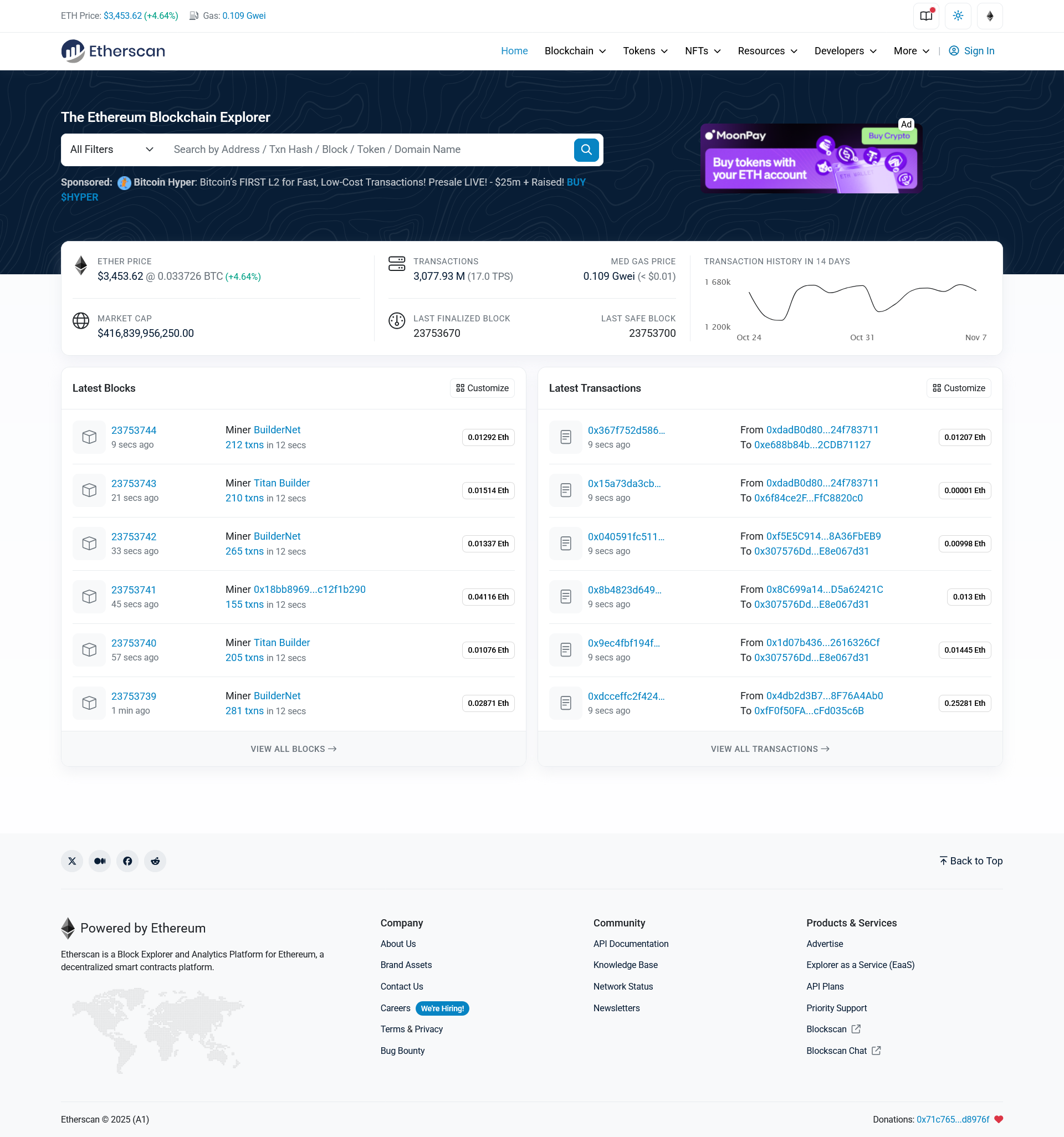
Etherscan: A Comprehensive Guide to Ethereum’s Blockchain Explorer
Introduction :-
As blockchain technology continues to gain mainstream adoption, transparency and accessibility have become essential features of decentralized networks. Etherscan is one of the most widely used tools in the Ethereum ecosystem, serving as a blockchain explorer that allows anyone to view, verify, and analyze activity on the Ethereum blockchain. From tracking transactions to inspecting smart contracts, Etherscan plays a critical role in making Ethereum open and auditable.
What Is Etherscan?
Etherscan is a blockchain explorer specifically designed for the Ethereum network. It provides a user-friendly interface that enables users to search and inspect blockchain data such as transactions, wallet addresses, blocks, tokens, NFTs, and smart contracts.
Importantly, Etherscan is not a wallet and does not store private keys. It is a read-only analytics and exploration platform that pulls data directly from the Ethereum blockchain and presents it in a human-readable format.
Key Features of Etherscan :-
1. Transaction Tracking :-
Users can search any transaction hash (TxID) to view:
. Sender and receiver addresses
. Amount transferred
. Gas fees paid
. Confirmation status
. Timestamp and block number
This feature is especially useful for verifying whether a transaction has been completed or is still pending.
2. Address Lookup :-
By entering an Ethereum wallet address, users can see:
. ETH balance
. Transaction history
. Tokens and NFTs held
. Interactions with smart contracts
This transparency supports auditing, compliance, and personal portfolio tracking.
3. Smart Contract Analysis :-
Etherscan allows users to:
. View verified smart contract source code
. Read and write to smart contracts (if supported)
. Inspect contract creation details
This is crucial for developers, auditors, and users who want to assess whether a decentralized application (dApp) is trustworthy.
4. Token and NFT Explorer :-
Etherscan provides detailed data on:
. ERC-20 tokens (fungible tokens)
. ERC-721 and ERC-1155 NFTs
. Token holders, transfers, and supply metrics
This helps users evaluate token distribution and detect suspicious activity such as whale movements.
5. Gas Tracker :-
The Gas Tracker shows real-time Ethereum gas prices, helping users choose optimal fees for:
. Fast confirmations
. Standard transactions
. Cost-saving transfers
This feature is particularly useful during periods of network congestion.
6. Developer Tools and APIs :-
Etherscan offers APIs that developers can use to:
. Retrieve blockchain data programmatically
. Monitor addresses and transactions
. Build analytics dashboards and dApps
Why Etherscan Is Important :-
Etherscan enhances trust and transparency in the Ethereum ecosystem. Because blockchain data is public but complex, Etherscan bridges the gap between raw data and usability. It enables:
. Fraud detection and scam investigation
. Independent verification without intermediaries
. Better decision-making for investors and developers
Without tools like Etherscan, interacting with Ethereum would require deep technical knowledge and direct node access.
Common Use Cases :-
. Verifying crypto payments
. Auditing smart contracts
. Researching tokens before investing
. Tracking NFT transfers
. Monitoring whale activity
Limitations of Etherscan :-
While powerful, Etherscan has some limitations:
. It cannot reverse or modify transactions
. It does not prevent scams—it only exposes data
. New users may find the interface overwhelming
Understanding blockchain fundamentals is still necessary to interpret the data correctly.
Conclusion :-
Etherscan is an indispensable tool in the Ethereum ecosystem, empowering users with transparency, accountability, and insight into blockchain activity. Whether you are a beginner checking a transaction, an investor researching a token, or a developer auditing smart contracts, Etherscan provides the visibility needed to interact confidently with Ethereum.
As decentralized technologies evolve, platforms like Etherscan will remain essential pillars supporting trust in open financial systems.